GAZETTE- CABERNET SAUVIGNON, PART 2: NAPA VALLEY

As I noted in my last column, my recent California Cabernet Sauvignon tastings were dominated by Napa Valley, both in quality and the number of wines tasted. Although the valley has a long agricultural history that has little to do with Cabernet Sauvignon, you wouldn’t know it if you just looked at the last forty years. Over this time, “Napa Cab” has gone from strength to strength. From winning the famous Paris tasting in 1976 to becoming one of the most prestigious wines in the world.

Also, as the region has evolved, numerous “sub-appellations” (such as Mt. Veeder, Rutherford, Howell Mountain, Stags Leap, Coombsville and Pritchard Hill, Spring Mountain, Atlas Peak, St. Helena, and Oak Knoll) have emerged to display localized character offering special appeal. The only drawback is prices continue to escalate. 

Still, the wines below deliver the expected Napa Valley style and quality. My favorites displayed firm backbone and vigor, with mature fruit (often blackberry and black currant), classic herbal qualities, and notes of vanilla or toasted oak resulting in a whole that coheres all of its parts. Others were super ripe and broad mouthed but with enough vitality to appeal to my sensibilities. 

I have listed recommended wines in order of my preference.

2015 Chappellet Pritchard Hill ($235) from a winery that has been producing highly prized Napa Valley wines since 1967, Pritchard Hill is its flagship and one of Napa’s iconic Cabernets. Beyond most our budgets, there is no questioning it is outstanding. Everything about this mountain grown wine is large scaled, with concentrated dark berries, richness and complexity throughout. It has the structure and savory complexity to evolve and drink well for at least 20 years. 

2015 Chappellet Hideaway Vineyard ($125) with grapes from the rocky slopes of the Pritchard Hill estate, it is nearly as good as the flagship at half the price. Juicy and lively, yet luscious and satiny, it is wonderfully integrated.

2016 Ackerman Napa Valley ($95) made with grapes from the family’s certified organic Stonehaven Estate in Coombsville in southeastern Napa, the wine’s deep aromas and flavors of cedar, mint and cocoa integrate nicely with lively baking spice, vibrant, and firm tannins. 

2016 Duckhorn Napa Valley ($78) making quintessential Napa Valley wines since 1978, this offers intensity of fruit and solid tannin with herbs and anise along with hints of tobacco and spice. 

2016 Mi Sueno Lynn’s Vineyard ($95) from an estate owned vineyard on Mt. Veeder, Mexican-American immigrants Rolando (who has made wine at some of Napa’s most prestigious wineries) and Lorena (who co-owns the winery and their vineyard management company). Character reminiscent of fruit compote incorporates nicely with toasty oak and tobacco accents in a sleek texture. 

2017 Ehlers Estate ($55) from the winery’s estate grown organic vineyard in Napa’s St. Helena sub-appellation, minty, herbal plum rich and solid. All of the proceeds from the sale of its wines support heart research. 

2016 Gamble Napa Valley ($60) from a family of Napa Valley farmers since 1916 now making their own wine, expect a friendly wine with vibrant fruit and notes of spice and tobacco, finishing with solid tannins.

2016 Mount Veeder Napa Valley ($44) named after the sub-appellation on the southwestern edge of the valley, fruit from its high elevation vineyards yielded this good value wine with a smooth and viscous palate delivering chocolate and toasted oak. 

2016 Mount Veeder Napa Valley ($44) named after the sub-appellation on the southwestern edge of the valley, fruit from its high elevation vineyards yielded this good value wine with a smooth and viscous palate delivering chocolate and toasted oak. 

2017 Silver Ghost Napa Valley ($35) this newly launched Cabernet specialist named after a great grandfather’s favorite car, the 1909 Rolls-Royce Silver Ghost, has combined fruit from Calistoga and Yountville vineyards to produce an outstanding value.

2017 Acumen Mountainside ($65) from two organically farmed estate vineyards on Atlas Peak in the southwestern hills of the valley, this one’s rich but austere, with plump fruit and herbal, smoky notes finishing dry.

2016 Charles Krug Napa Valley ($39) the valley’s oldest winery, established in 1858, and still producing quality like this ripe, juicy, nicely restrained and centered wine; a good value.

2015 Ladera Estate ($60) estate grown grapes from high elevation vineyards on Mount Veeder and Howell Mountain yield a robust, dense wine with spicy herbs and juicy red fruit followed by firm tannins.

2016 J. McClelland Napa Valley ($45) winemakers Mitch Cosentino and Paul Scotto created this winery to honor long-time Napa Valley veteran John McClelland. This wine shows deep fruit, herbal accents, and a firm texture.  

2016 Black Stallion Estate ($28) the Napa property of the Indelicato family, who came to California in 1924 and today is one of the largest wine companies in the U.S. located on the Silverado Trail in the Oak Knoll district of southeastern Napa; this good value offers a fairly rich, fruit forward character with a smooth but firm finish. 

CALIFORNIA CABERNET SAUVIGNON, PART 1

Even as consumers experiment more with variety in their wine choices, Cabernet Sauvignon continues to reign as California’s premier wine. Maybe that is because as a group, the wines are better than ever. Other reviewers have noted this and it was born out in my recent tastings. 

And as growers and winemakers learn more about the best conditions for cultivating the grape and the best practices for elevating those grapes into wine, these are yielding wines of exquisite balance – rich and ripe but resolved with definition and freshness. 

Napa Valley is the undisputed leader of California Cabernet Sauvignon wines and it was in my tastings. But prices generally are higher than comparable wines from other regions. Luckily, there also are good value Cabernets (defined here as under $30) available from other regions. These wines are the focus of this column. My next column will feature Napa Valley.

First, there were a couple good ones carrying a California designation, meaning they contain grapes from multiple regions. Interestingly, they are from two large wine companies: 2017 Storypoint ($20), vinted by Gallo, shows forward fruit and 2016 Silver Palm ($22), part of the Jackson family of wines, is rather full and firm.

I found several from Lodi, the region in central California with a reputation for a good quality/price relationship. The call words for the wines below are a sweetness, richness and softness. 

  • 2016 The Federalist ($18), sporting Benjamin Franklin on the label, sports cherry and vanilla 
  • 2017 Mettler Estate Grown ($25) offers plum and blackberry 
  • 2015 Michael David “Earthquake” ($26) presents smoke and tobacco to offset deep fruit

I also was impressed with several wines from Paso Robles on the Central Coast, California’s most underappreciated cabernet sauvignon region. The 2017 Concannon ($19) tilts to fresh red berries finishing with a slight, appealing char. The other three wines were all from J. Lohr, one of Paso Robles pioneer wine producers dating to 1974. This family owned operation produces reliable quality at various price levels. 

The 2016 Seven Oaks ($17) is a perennial good value. Enjoy its sweet, lush fruit. Then there was the 2016 Hilltop ($35), from high elevation, sustainably farmed vineyards. It is toasty with succulent fruit, with an herbal tinge and oaky note, finishing with a sleek texture and crisp tannin. And recently J. Lohr created “Signature” (2016, $100) as its entry into high-end wine. And it’s a successful one. It’s extracted, powerful, and rich with succulent fruit, and oaky espresso, spice and savory qualities. 

My tastings also turned up a few good options from California’s northern wine regions. Concannon’s Mother Vine Livermore Valley Reserve (2016, $44) is produced with “Concannon Clones” that have long been a standard for wineries throughout the state. Its laden with plum and red fruits, a hint of tobacco, and nicely balanced with a lush palate and easy tannins. 

The 2017 Benziger Sonoma Valley Reserve ($40) is made with organic grapes and delivers scents of wild herbs and green olive to preview flavors of blackberry with powdery tannins. Finally, the 2016 Shannon Ridge “Ovis” ($60), from Lake County’s High Valley, is quite seductive with lots of fruit accented with menthol and tobacco followed with a sleek palate closing with grippy tannins. 

CALIFORNIA MERLOT OFFERS GOOD VALUE, CABERNET-LIKE QUALITY

It wasn’t long ago that Cabernet Sauvignon and Merlot were the big two California red wines – with Cabernet most widely planted and most popular with consumers but Merlot right behind. Now merlot has dropped to fourth most planted red variety, after pinot noir and zinfandel. That’s still a pretty good showing but my recent tasting suggested to me that California Merlot wines demand even more attention from consumers. This is especially true if you are looking for Cabernet-like quality at more reasonable prices. I know I’m always looking for good wine values.

Like cabernet sauvignon, merlot originated in Bordeaux and is featured prominently in many of the region’s finest wines. Also, like cabernet sauvignon, its best wines are full and rich, featuring darker fruits and solid structure, often with savory or herbal elements. The major difference is that Merlot wines tend to present a softer texture and rounder mouthfeel. 

And I did find several good values. Listed in order of my preference, these wines make for fine everyday drinking.

2015 McIntyre “Kimberly Vineyard” ($28) from a well-known Monterey County viticulturist, this vineyard in Arroyo Seco has produced a velvety, well-structured wine, with fine depth of fruit, herbal notes, and cocoa. 

2017 Pedroncelli “Bench Vineyards” ($18) from a family that has been farming vineyards in Dry Creek Valley for over ninety years, this is an amazing value for its pretty fruit, solid structure and spice.

2016 Bonterra Elysian Collection ($25) from California’s premier organic winery, this easy drinking wine is made with organic grapes and provides earthy notes to its lush fruit. 

2017 J. Lohr Loso Osos ($15) from one of Paso Robles best known wineries and its from grown grapes, this is a particularly fine value and widely available. Its pure red fruit fleshes out over a lush texture with a tinge of tobacco.

2016 Educated Guess Napa County ($25) from Roots Run Deep winery, this offers nice red fruits cocoa straightforward sweet-oak and herbs a bit more tannic

At higher prices, I found the world-class quality one would expect from well-chosen vineyard sites and attentive winemaking. These are wines of power and elegance, balance and complexity. They are also listed in my order of preference.

2015 Chappellet Napa Valley ($45), from one of California’s most prestigious wineries, especially for its expensive first growth level Cabernet Sauvignon’s, we have this rich, complex, and powerful wine, with its smoky, savory, spice and refined character.

2016 Duckhorn Napa Valley ($56) from the winery that helped put California Merlot on the map and still is a leader, this wine impresses with oaky richness joined with savory tobacco and light red pepper notes. It is more tannic than the other wines here but that is balanced with full-bodied fruit and a sumptuous palate.

2015 Long Meadow Ranch Napa Valley ($35) from a family-owned agricultural enterprise that also farms olives and cattle while employing an integrated, organic farming system, this one is softer and rounder but nicely balanced with solid fruit, creamy fresh oak, a touch of earth, and spice. 

ZINFANDEL: A HAVEN FOR VALUE

Readers of this column for any length of time may remember that Zinfandel is my favorite wine. 

First, I love its typically exuberant berry fruit. It can be big and bold with high alcohol, jammy raspberry, black cherry or blackberry fruit and immense weight. Or it can be balanced, elegant, nuanced, though still with significant alcohol. With either, Zinfandel typically presents fresh, succulent fruit, with a brash, even a little wild character (often described as briar or bramble), a precise palate, though with moderate tannin, finishing with a balancing spicy accent. 

Even better, Zinfandel is one of the best values in wine, considering the overall quality, which can rival the finest wines in the world. Almost all of the best wines are under $50; there are many excellent ones between $40 and $30; and countless good wines under $20. 

Psychologically, a bonus is that Zinfandel is the quintessentially American grape: an immigrant that came here in the early 1800s [first New York and then California, from humble origins in Europe (in Croatia through Austria and southern Italy)] and has succeeded here better than anywhere else. And it really is the only grape that makes indisputably better wine in California than anywhere else. 

Looking back, all of my recommended are from family owned wineries. Also, note that recommendations are listed in order of my preference within each category.

Good Values for Everyday:

Artezin. Conceived as an heirloom and heritage project focused on old vine zinfandel from family owned, sustainably farmed vineyards, Artezin also has branched out to include Rhone varieties but Zinfandel remains the flagship. The 2017 Old Vine Mendocino County ($16) is notable for forward fruit and hints of herbs.

The Federalist. Similar to Artezin, The Federalist emphasizes Zinfandel, though producing other wines, too. The label for each wine is graced with the likeness of a Founding Father. For the 2016 Dry Creek Valley ($18), it’s Alexander Hamilton and oaky blackberry and plum with fresh tannins. The 2016 Lodi Zinfandel ($18) features George Washington and pure cherry and raspberry, hint of black pepper. 

Cline Family Cellars. In the late 1800s, the family’s ancestors settled in Contra Costa County east of Oakland near the town of Oakley and planted zinfandel and Rhône varieties. The winery was founded in 1982 with a focus on preservation and the family now is one of the largest holders of 100-plus-year-old vineyards in California. Their 2017 Old Vine ($12) is sourced from growers in the Mokelumne River AVA, arguably the most respected in the Lodi region. It presents ripe red berry fruit, with hints of pepper. The 2017 line Ancient Vines ($20) from some of the family’s oldest vineyards in Contra Costa, shows a bit more depth of brighter fruit and suggestions of black licorice.

Edmeades. Established in 1972, Edmeades has long been respected as a Zinfandel specialist, even as the winery has branched out to other varieties. The 2016 Mendocino County ($20) offers bright, juicy raspberry, a touch of caramel, admirable depth but is light on its feet; a hint of bitter herb in the finish. 

Oak Ridge Winery. A family owned winery in Lodi, they work with various growers in Lodi to produce several brands, including OZV, dedicated to old vine zinfandel. The 2016 OZV Old Vine ($13) shows raspberry and blackberry with balanced acidity. 

Oak Farm Vineyard. Another family owned and operated estate winery located in Lodi. The property has a 160-year history as a farm. The 2017 Tievoli Red Blend ($20) is 4/5ths zinfandel, the rest petite sirah and barbera. It tends to the sweeter end of the spectrum, while a peaty soil note offers intrigue.

More Expensive But Worth The Extra Money: 

Dry Creek Vineyard. Established in 1972, Dry Creek Vineyard is the modern day pioneer of Dry Creek Valley wine. Most of its vineyards are farmed sustainably and the winery is also 100% Certified Sustainable. While a variety of wines are made, I have always been partial to the Zinfandels. The 2016 Dry Creek Valley Old Vine ($35), where toasty, woodsy, peppery aromas overlay abundant blackberry and raspberry, is a perennial favorite. 

Sidebar Cellars. Sidebar is a new project from highly regarded Sonoma winemaker David Ramey focused on experimentation with diverse varieties. This Zinfandel is made with fruit sourced from the historic and certified sustainable Alegria Vineyard in the Russian River Valley, which dates to 1890. The 2016 Old Vine ($28) is firm and focused, with plum, blackberry, and black pepper. It is full, fresh, and lush.

Mettler. From a family that has been growing grapes in California’s Lodi appellation for over 100 years and has become leaders in organically and sustainably grown viticulture. The 2017 “Epicenter” Old Vine ($25) displays red and dark berries mixed with smoke and herbal notes, delivered with a fresh, fine-grained texture. 

Breaking Bread Wines. A new project by Erik Miller, the winemaker of Kokomo Winery, to appeal to those interested in lower alcohol wines. The 2018 Zinfandel ($24) uses fruit from a nearly 50 year-old, 100% dry-farmed vineyard in Redwood Valley, Mendocino County. It is made using the whole-cluster fermentation (carbonic maceration) method, all native yeast for spontaneous fermentation, all native bacteria for malolactic fermentation, and no added sulphur. This has yielded a wine with a purity of fruit that should be appealing regardless of alcohol level.

MAKE IT A BUBBLY NEW YEAR

Sparkling wine is so popular some version of it is made in almost every country that produces wine. Sadly, most of it is drunk only during holidays or special occasions. That certainly is understandable, as these wines just seem to make any occasion seem more festive, more special. 

And that is why, this year, I decided to publish my annual sparkling wine column AFTER the holidays. My mission here is to convince you to drink sparkling wine throughout the year.

Sparkling wine is so popular some version of it is made in almost every country that produces wine. Sadly, most of it is drunk only during holidays or special occasions. That certainly is understandable, as these wines just seem to make any occasion seem more festive, more special. 

And that is why, this year, I decided to publish my annual sparkling wine column AFTER the holidays. My mission here is to convince you to drink sparkling wine throughout the year.

This year, I’ve been drinking a lot of Crémant d’Alsace. This bubbly from a region better known for amazing Rieslings and Gewurztraminers is produced from the classic Champagne varieties – pinot noir and chardonnay – though pinot blanc, pinot gris and riesling may make it into some blends. Crémant d’Alsace rosés, though, are made from 100% Pinot Noir. All wines made using the same method as in Champagne, usually described on labels as “Méthode Champenoise” or “Méthode Traditionnelle”. These wines, which are nonvintage can be approached as more affordable alternatives to nonvintage Champagne, with comparable quality.

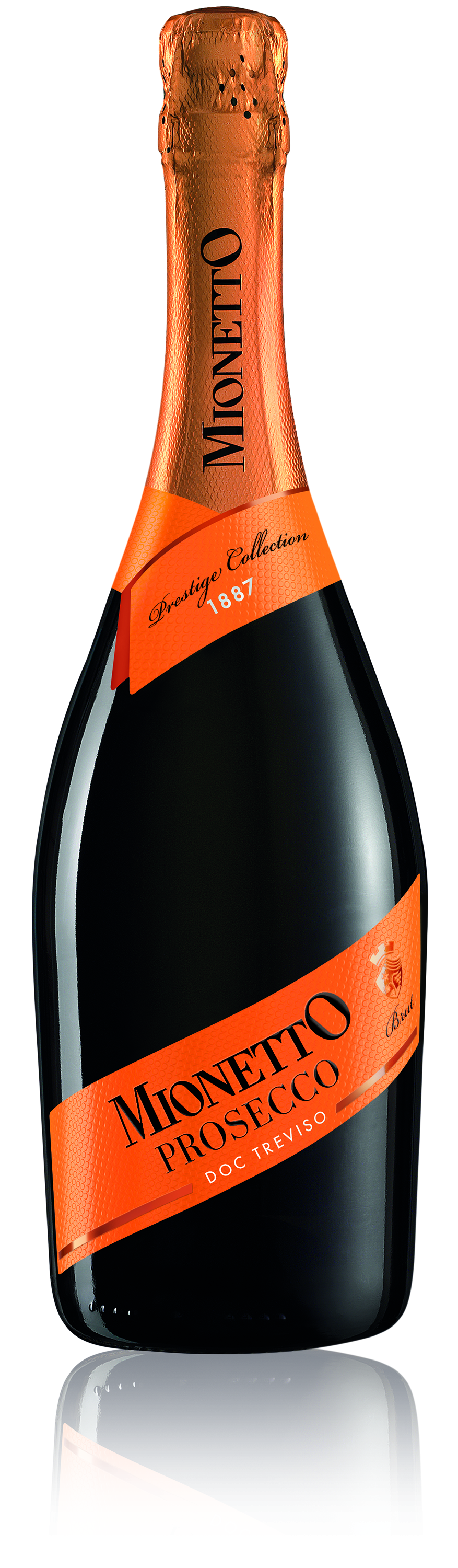
Prosecco, that foamy, fruity northeastern Italian wine from the native glera grape, has vaulted in popularity in recent years. When I visited the region in 2001, I became aware of the reputation of Adami as one of the region’s best producers. The winery is known especially for its single vineyard Prosecco (a pretty rare thing in the region). Probably more important, though, is all its wines are distinguished by aging with extended lees contact before the secondary fermentation that produces the bubbles. And that secondary fermentation takes place in small batches throughout the year (the common process is to ferment shortly after harvest in one large batch). 

Ever heard of “Methode Cap Classique”? It’s a creative way of describing South African sparkling wine made in the traditional Champagne Method. MCCs often use traditional Champagne varieties, as well as more signature South African grapes like Chenin Blanc. These are up and coming bubbly that deserve your attention.

RECOMMENDATIONS:

Crémant d’Alsace 

  • Lucien Albrecht (a pioneer in the establishment of Alsace Crémant nearly fifty years ago): Brut ($23) mostly pinot blanc; fresh and crisp apple and apricot with pleasant saline and chalky notes. Brut Rosé ($23) 100 percent pinot noir; fresh strawberry and citrus, creamy palate
  • François Baur Brut Réserve (established in 1741, now farming biodynamically): pinot blanc, riesling, chardonnay, pinot gris; tropical fruit, lychee, soft palate
  • Dopff & Irion Rosé Brut (one of the first Alsace wineries to use the Champagne Method): 100% pinot noir; pretty cherry, crisp and upstanding 
  • Gustave Lorentz Brut (family owned since 1836, estate vineyards are organic): chardonnay pinot blanc and pinot noir; bright citrus, juicy, fresh and a little spicy 

Adami Prosecco 

  • “Garbel” Treviso Brut ($16) the family’s entry-level Prosecco; lemon, pear, honey
  • “Dei Casel” Valdobbiadene DOCG Prosecco Superiore Extra Dry ($20) a bit of sweetness, lightly floral with citrus
  • “Bosco di Gica” Valdobbiadene DOCG Prosecco Superiore Brut ($20), Adami’s best-known wine and a perennial favorite of mine; uplifting foam, brisk citrus with tangy finish
  • 2018 “Vigneto Giardino” Valdobbiadene DOCG Rive di Colbertaldo Asciutto  ($22) the first single-vineyard Prosecco ever made; opens with fruit punch, a hint of anise, mouthfilling and finishes with a blast of fruit

Methode Cap Classique 

  • Boschendal Brut Rosé ($28) mostly pinot noir, with a touch of pinotage and chardonnay from the estate’s top vineyards; displays notes of red berries, with some complexity 
  • 2013 Graham Beck Blanc de Blancs ($29) 100 percent chardonnay; a selection of the estate’s highest-quality chardonnay; crisp lemon wrapped in toasty crème brûlée; drinks intense, brisk and austere
  • 2015 Ken Forrester Sparklehorse ($30) 100% Chenin Blanc; hints of creaminess yield to tight, brisk citrus and apple, my favorite of the three

HOLIDAY WINE DRINKING, PART 4: GET INTERNATIONAL WINES INTO THE ACT

Nie Weiss Vineyards

Ok procrastinators (like me)! You have maybe have 24 hours left to get some wine for gifts, Christmas dinners, parties or receptions. In this column, the last of a three part series, I recommend many budget friendly wines that would be ideal for any of these purposes.

Let’s begin with Malbec from Argentina. Trapiche is one of Argentina’s largest and oldest (129 years) producers. Yet, they generate quality at every price level. These two are fine everyday values. The 2016 Medalla ($25) – tasty and firm berry and currant – and the 2017 Broquel ($15) – soft, fresh, friendly – are good examples of why Argentinian Malbec is so popular with consumers.

For a variation on the theme, look to Chile and Carmenère. A good place to start is with the 2017 Marques Casa Concha ($25). A product of Concha y Toro, Chile’s largest wine company, it is sourced from two historic vineyards, Puente Alto and Pirque, both located in the Maipo region. It is pleasantly earthy and herbal, with berry and pepper, finishing with solid tannins. 

One of my favorite sources of good value wines is Portugal. And the wines from Symington Family Estates, whether the famous Ports or the table wines that are growing in reputation. For instance, the 2017 Vale do Bomfim ($13) is a “go to” value wine for me. Made with fruit from vineyards that supply the Port producer Dow’s, its fruit suggest dark plum with that followed by peppery and stony notes. It drinks rather firm and full. 

Speaking of Port, it is something I really crave this time of year. A good place to get introduced to this sweet, high alcohol, intensely flavorful dessert wine is with Graham’s “Six Grapes” Reserve Port ($25). For a few dollars more, you can enjoy a Dow’s “10 Year Old Tawny” Porto ($37). Aged in wood for an average of ten years, it is delightfully mellow with succulent fig and plum, with a little bitter almond.  

Just because we are in the middle of the cooler seasons, doesn’t mean you should forget about Rosé. And where better to look than France and Provence. The 2018 La Bernarde (Les Hauts du Luc) Cotes de Provence ($20) is a blend of 40 percent cinsault, 40 percent grenache and 20 percent rolle (a white grape). Made with organic grapes, it offers interesting stone and melon aromas, with an herbal touch. The palate is fresh with citrus and strawberry. 

Rosé has become so popular over the last couple of years, it seems like every wine region is getting into the act. Like South Africa with the 2018 Backsberg Pinotage Rosé ($13). From a winery with a 100 year winemaking history, expectedly it opens with appealing raspberry and citrus followed by a palate of tangy, juicy red berries, and finishes with a bit of spice.

And let’s not forget white wine. From Germany and the highly regarded Mosel producer Nik Weis, the 2018 St. Urbans-Hof Ockfener Bockstein Kabinett ($22) is a fine value. It offers floral aromas with a steely quality to its dominant lime fruit and drinks crisp and refreshing. 

For more affordable, dry white wines, I found two nice options from neighboring France, specifically Bordeaux. From Clarence Dillon Wines, the owners of the famed Château Haut-Brion and importer other many other well-regarded Bordeaux château, the 2018 Clarendelle Blanc ($19) is a fine place to start. With 42 percent semillon, 30 percent sauvignon, and 28 percent muscadelle, the wine is marked by lemon, lime, and herbs. 

The 2017 Légende Blanc ($18) also comes from premier Bordeaux pedigree, in this case the Domaines Barons de Rothschild of Château Lafite. This one is 50 percent sauvignon and 30 percent semillon from the sub-appellation Entre-deux-Mers. It is brisk with apple, citrus, and tropical fruit. 

And now for some affordable red Bordeaux – yes, there is such a thing. Actually here are three really good values.

2015 Légende ($50). With 70 percent cabernet sauvignon and 30 percent merlot from the commune of Pauillac, the winemaking team at Lafite has produced a wine of classic blackberry and currant with cedar notes and hints of olive and tobacco. It drinks nicely rounded but finishes with lively tension. 

2015 Château Cap Leon Veyrin ($18). From Listrac, this Cru Bourgeois is composed of 55 percent merlot, 40 percent cabernet sauvignon, and 5 percent petit verdot. Its nice black fruit is delivered with a sense of density and is accented with hints of toastiness. It finishes with solid tannins suggesting it would benefit from a few years of development.

2016 Château Laffitte Carcasset ($23). Also a Cru Bourgeois, this one from from Saint-Estèphe is, to my palate, the best of these three. Bursting with plum and currant fruit, wrapped in nicely integrated cedar/oak, there is a sense of richness, while the fruit is structured with fresh tannins. It is 47 percent cabernet sauvignon, 40 percent merlot, 7 percent cabernet franc and 6 percent press wine.

Finally, from Australia three really good wines from Two Hands, all 2018 vintage and $33, are ideal either for gifts or for drinking yourself.

  • “Sexy Beast” Cabernet Sauvignon McLaren Vale offers interesting pencil shavings and mint aromas, followed by flavors of black currant and licorice. It is focused, with silky texture.
  • “Angel’s Share” Shiraz McLaren Vale presents vibrant cherry and raspberry, with crisp, fine grained tannin and finishes with spice notes. 
  • “Gnarly Dudes” Shiraz Barossa Valley is bold and energetic with juicy berries, with a touch of licorice, black pepper and meaty notes.

NON-WINE HOLIDAY GIFT SUGGESTIONS, PART 3: COOK STREET SCHOOL OF CULINARY ARTS

Cook Street

For the last recommendation in this series, I have a recommendation for the food and cooking enthusiast on you holiday gift list.

 Denver has increasingly gained national recognition for its exciting culinary community, something that has been growing over the last twenty years. While restaurants and bars have received most of the attention, there also has been dramatic improvement in the local agriculture and culinary education. 

One of the leaders in that culinary education renaissance has been the Cook Street School of Culinary Arts. Founded in 1999 as a contemporary culinary center devoted to providing a professional and recreational experience, Cook Street has offered an accelerated professional training program, along with recreational classes to food and wine enthusiasts and amateur cooks alike to expand their abilities and creativity.

Just a few months ago, Cook Street moved from their LoDo location to a new home in the Golden Triangle neighborhood just south of downtown. The new space is located at 43 W. 9th Ave. Denver, Colorado 80204. “The new Broadway location provides easier parking and access for all of our customers, along with a larger space with a new layout and new kitchen equipment,” said Lindsey Reese, Cook Street owner and director.”

Also new are one-night cooking classes that weren’t available in the previous space, along with a larger meeting and private event space that can be fully catered or left private. 

To order a gift card online, go to https://cookstreet.com/cook-street-gift-cards/. The gift cards are redeemable towards any of the cooking classes. The only caveat is if you are having a physical gift card mailed, you must place your order before December 20th to ensure the card arrives in time for the holiday. 

A good alternative is to have a code emailed to your recipient. Call 303-308-9300 for instructions. If you live in Denver, you also can just go to the school at 43 W. 9th Ave.

BUT DON’T FEEL CONSTRAINED BY THE HOLIDAYS. THE GIFT OF A COOK STREET CLASS IS A FINE CHOICE FOR ANY OCCASION THROUGHOUT THE YEAR. AND, WHILE YOU ARE AT IT, SIGN YOURSELF UP, TOO!

HOLIDAY WINE DRINKING, PART 2: WINE BLENDS, THE WHOLE IS GREATER THAN SUM OF THE PARTS

Whether you realize it or not most wines you drink are blends of multiple grapes. Yes, certain grapes make fine wine flying solo but just as cultural diversity is a societal strength, so varietal diversity has its benefits. Each of the wines below (listed in order of my preference in each category) displays the synergy that embodies the classic sentiment of the whole being greater than the sum of its parts. 

First, I tasted a few Good Values. These wines emphasize fresh fruit and approachable tannins making for immediate enjoyment. And they are they are priced to make them ideal for a weeknight meal or to help stretch your holiday dollars. 

2016 Bonterra “Equinox” ($16) made with organic grapes, this merlot/petite sirah mix is open and friendly with ripe fruit, and a round, smooth texture. 

2016 Seven Deadly Red ($16) another welcoming wine, this one shows red berries and hints of black pepper from zinfandel and petite sirah (with dashes of cabernet sauvignon and merlot). 

2016 The Federalist “Honest” ($18) with President Lincoln on the label (of course), this one’s mostly merlot and zinfandel; expect mixed red berries, hint of tobacco, light spice, and smooth texture. 

For many, the Bordeaux formula blending various percentages of cabernet sauvignon, merlot, cabernet franc, malbec, and petit verdot is the template. The wines below are variations on this classic style. The prices increase but so does the flavor interest. 

2016 Ramey “Claret” ($42) this one is half cabernet sauvignon and one quarter merlot, with doses of malbec, syrah and petit verdot; it is accessible yet with good structure, showing sturdy dark fruits. 

2015 J. Lohr “Cuvée ST. E” ($50) emulating the wines of Saint-Émilion with four fifths cabernet franc and one fifth cabernet sauvignon, this is fleshy, ripe, and oaky, with roasted notes, and a plush finish. 

2016 Chalk Hill Red Wine Sonoma County ($70) at 86 percent cabernet sauvignon, this could legally qualify as a varietal wine. Supplemented with malbec, zinfandel, and merlot, it is rich with concentrated stewed berries lively presented, finishing with soft tannins. 

2016 Dry Creek “The Mariner” Dry Creek Valley ($50) roughly two thirds cabernet sauvignon with smaller amounts for the other Bordeaux varieties, this displays rather intense berries and currants with a full texture and husky finish.

2017 Chappellet “Mountain Cuvee” ($35) another wine mingling all five traditional Bordeaux grapes, it is lively, with sweet fruit, and savory character.  

2015 Fifty Harvests “Meritage” Napa Valley ($50) at three fourths cabernet sauvignon and one fourth petit verdot, this collaboration of winemakers Paul Scotto, Mitch Cosentino, and Mark Smith is deep, fruit forward, herbal, and freshly textured. 

2015 McIntyre “Per Ardua” Kimberly Vineyard ($60) the inaugural release of this SIP Certified, sustainably grown wine, from Arroyo Seco in Monterey County is dominated by merlot; hints of tobacco accent tight, dark fruit.

2016 Dry Creek “Meritage” ($30) using all five varieties but dominated by two thirds merlot, this opens with bright fruit that leads to a fairly full, yet supple wine. 

Still others take southern France as inspiration, blending grapes like syrah, grenache, mourvedre, and petite sirah. The ones in this report, though, also mix in Bordeaux and Italian grapes. This is California, after all. 

2015 Bootleg Red Wine ($38) a majority merlot fortified with petite sirah and syrah, this is an intense, rich style with blackberry, full and firm, with notes of peppery spice. 

2016 Adobe Road “Apex” ($76) let’s call this a Bordeaux (50 percent cabernet sauvignon/22 percent merlot) and Rhône (23 percent syrah/5 percent petite sirah) fusion, where the Bordeaux grapes provide savory structure and the Rhône grapes supply spicy, juicy fruit; another concentrated, ripe style. 

2016 Adobe Road “Redline” ($35) sort of a teenage Apex, with malbec sitting in for merlot and a significant addition zinfandel; its slightly less full but ripe fruit and spice are the dominant features. 

2017 J. Lohr “Pure Paso” ($27) a new red from this influential Paso Robles producer merges cabernet sauvignon and petite sirah to fine effect with smoky dark fruits, a burly frame and savory finish.

Finally, the uncharacterizable 2017 Upshot Red Blend ($28). This unconventional combination of merlot, zinfandel, malbec, riesling, and petit verdot is surprisingly balanced, but expectedly fresh and juicy, and a touch savory. 

NON-WINE HOLIDAY GIFT SUGGESTIONS, PART 2: FIRESTONE WALKER “ROSALIE”

Wine aged in whiskey barrels, whiskey aged in wine barrels, beer aged in wine barrels, beer brewed with various fruits or other flavorings – so maybe beer brewed using wine grapes isn’t as unusual as my first reaction suggested?

Enter Rosalie. Paso Robles brewer Firestone Walker calls it “Beer Rosé”. Co-fermented with local wine grapes. In a way, this brew recalls the Firestone family’s history as winemakers in Santa Barbara County’s Santa Ynez Valley. 

The journey to Rosalie began September, 2018 when nearby Castoro Winery harvested 200 tons of wine grapes for the brewery, including 100 tons of chardonnay and smaller lots of viognier, sauvignon blanc, riesling, muscat canelli and orange muscat. After the grapes were pressed, the juice was delivered to the brewery ready for co-fermentation.

Brewmaster Matt Brynildson says creating Rosalie required much experimentation to get the desired result. The wort was made with a light pilsner malt and a judicious amount of hops (the resulting beer clocks in at only 10 IBU). Brynildson said the chardonnay provides appealing textures and flavors, while the other varieties lift the aromas and add complexity. The final recipe includes hibiscus flowers in the whirlpool to create the beer’s brilliant rosé color (and add a bit of balancing acidity). 

That attractive color is then followed by aromas of red berries and a suggestion of the wine grape acidity to come. Bright fruit flavors of strawberry and tart cherry glide across the palate with a refreshing, crisp dryness. And keep in mind, since this is a beer at its base, ultimately it is more akin to a sparkling rosé, than a table wine rosé.

Rosalie is available in six packs of 12 ounce slim cans ($9) at 5% ABV and is an ideal beer/wine for the holidays, especially if you want a rosé.

And if you are in the Denver area during the holidays, I suggest stopping by Liberati Restaurant and Brewery in Denver’s Five Points area just north of downtown. Its founder, Alex Liberati, was born and raised in Rome and owned a brewery and a pub there before moving to (of all places) Denver two years ago to open Liberati – what he describes as the only brewery in the world devoted to the exploration of Oenobeers.

He describes “Oenobeer” as a beer/wine hybrid with each beer using a different wine grape in its fermentation. And, while wine/ beer hybrids have been experimented with for at least the last several decades, Liberati claims to be the only brewery in the world solely dedicated to this type of beer. 

The location includes an osteria with the food prepared by Italian chef friends who joined him on this adventure in Colorado. Needless to say, the emphasis is on authentic Italian dishes with many ingredients made made in-house. 

NON-WINE HOLIDAY GIFT SUGGESTIONS, PART 1: DIXIE SOUTHERN VODKA

Dixie Southern Vodka, an independent, craft distiller established in 2014 in Charleston, South Carolina, recently entered the Colorado market and I was pleased earlier this year to have an opportunity to sample its products with founder Matti Anttila at Denver’s Tupelo Honey Cafe

Mr. Antilla told me Dixie Southern Vodka is distilled six-times from American grown corn. He produces six 80-proof vodkas: the flagship Southern Vodka, Black Pepper, Citrus, Mint, Peach, and Wildflower Honey, with ingredients sourced from collaborative growing partners across the Southeast. Importantly, the flavor ingredients for several of these vodkas are obtained through collaboration from small, independent southern producers. 

They were a clean, flavorful and smooth. Typically, prices run about $23 per bottle. My favorite – a surprise to me- was the Black Pepper.

Dixie also is a member of 1% for the Planet, which means they have committed to donating at least 1% of sales to support local organizations across the country working together to protect the future of our planet. The current focus is bees, with donations to Charleston-based The Bee Cause, which provides observation hives to educate people about the importance of bees. They also have made donations for hives by other organizations across the country. This has included working with the Montzeuma Land Conservancy in Southwestern Colorado’s Four Corners area.

These vodkas shine in cocktails like Tupelo Honey’s “Wildflower Moscow Mule”, made with Dixie Wildflower Honey Vodka and “Madame Beauregarde” Martini, featuring Dixie Southern Vodka, St. Germaine liqueur, blueberry, basil, and orange. 

Mr. Anttila was proud that Dixie is a fast-growing brand nationally. After this tasting, I can see why. These vodkas would be an excellent gift for any of your vodka-loving friends. And while you are at the liquor store, pick up one (or more) bottles for yourself.